Home
Expertise
How does the Dutch Health Data Infrastructure work today, and what will it look like with the arrival of the European Health Data Space (EHDS)?
Health-RI is developing the national health data infrastructure that enables the secondary use of health data. Our goal is to improve health for everyone by facilitating data-driven research, policymaking, and innovation. With the implementation of the EHDS Regulation in 2029, the landscape will change significantly. The reuse of health data for research, policy, and innovation will become a right, while data sharing will become an obligation.
To make this a reality, we are building the health data infrastructure—the highway that enables the secure, efficient, and responsible sharing of data. Together with partners from across the healthcare and research ecosystem, we are developing the services and products needed to support this.
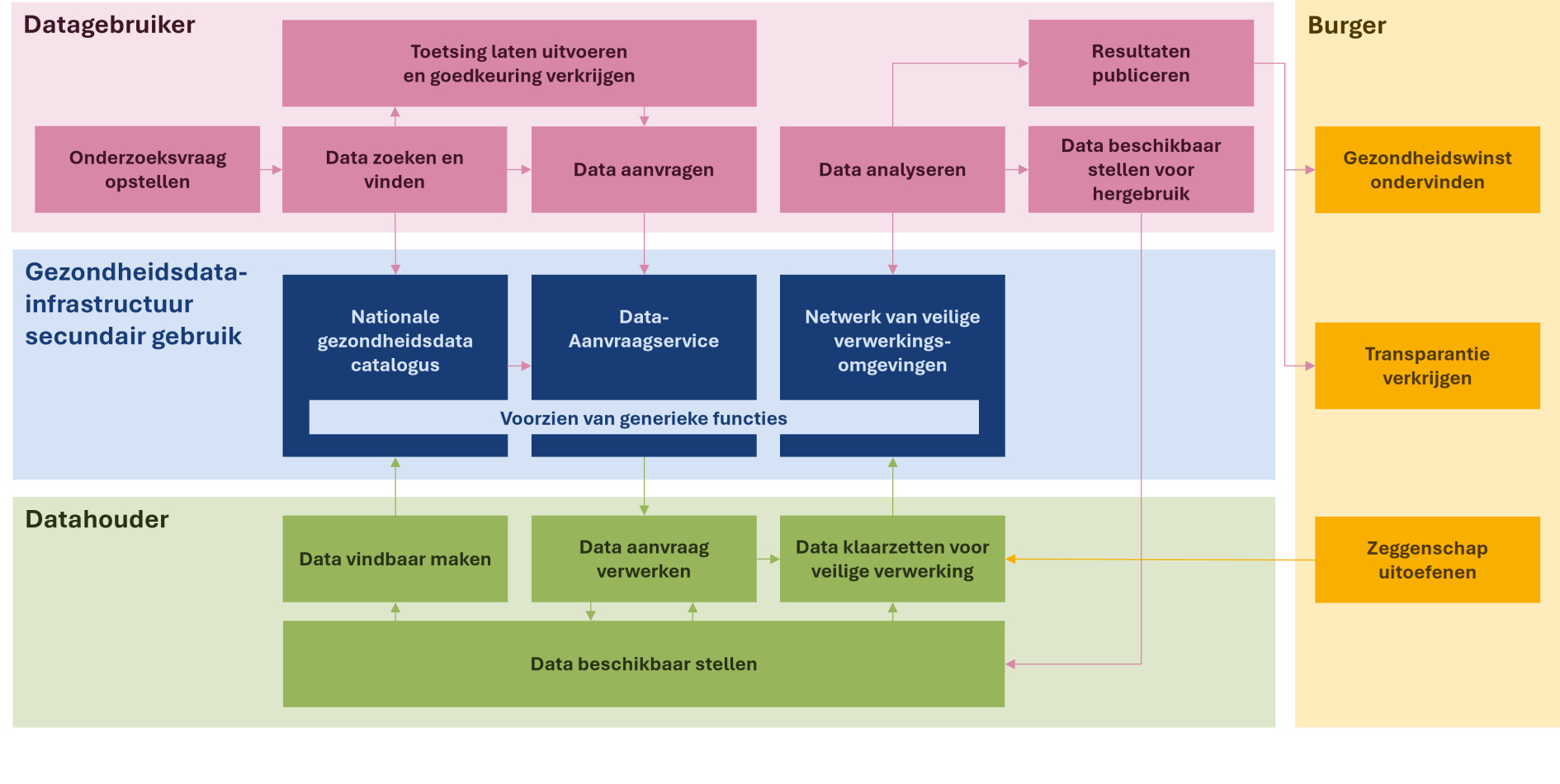
The visual below shows the Data Journey: a simplified representation of all the steps required to reuse health data responsibly and efficiently. Join us on a journey through the components of the infrastructure that Health-RI is developing and that are essential to making this data journey a reality. From searching for and discovering data in the national data catalogue, to submitting a request through the data access service, and ultimately making data available through a network of secure processing environments.
Below, we discuss step by step the different components of the infrastructure (highlighted in blue in the visual).
Finding and Sharing Data in the National Health Data Catalogue
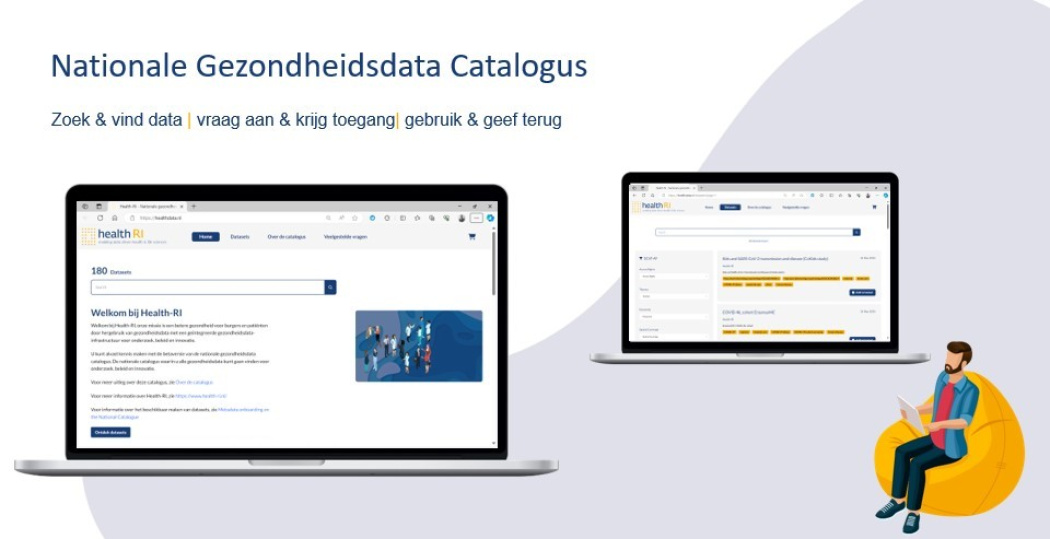
Health-RI is currently developing the Minimum Viable Product (MVP) version of the National Health Data Catalogue. In this catalogue, data holders can make metadata about their datasets available, enabling these datasets to be discovered and reused by data users such as researchers, policymakers, and innovators.
Data users can search and filter datasets within the catalogue to identify the most suitable data for their research, policy, or innovation needs.
To support data holders, comprehensive onboarding services will be provided. These services will help them make their data available in a way that complies with the requirements of the European Health Data Space (EHDS).
You can already explore the National Health Data Catalogue website. We regularly expand both the platform’s functionality and the number of available datasets.
Requesting Data Through the Data Access Service
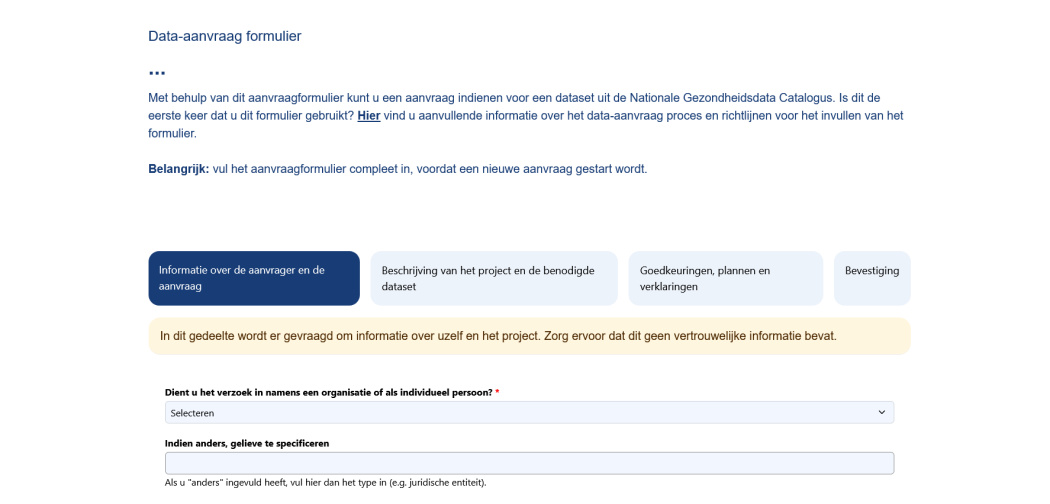
Have you found the datasets you need? Through the Data Access Service, you will soon be able to request multiple datasets from different data holders through a single application. This streamlines the currently complex process, in which each organization uses its own application procedures and assessment criteria.
The Data Access Service collects all the information required to carefully assess and review your research request.
You can already visit the Data Access Service and let us know how it can be further improved. Requesting datasets from the catalogue for research, policy, and innovation purposes is already possible, and we continuously work to enhance and simplify the application process.
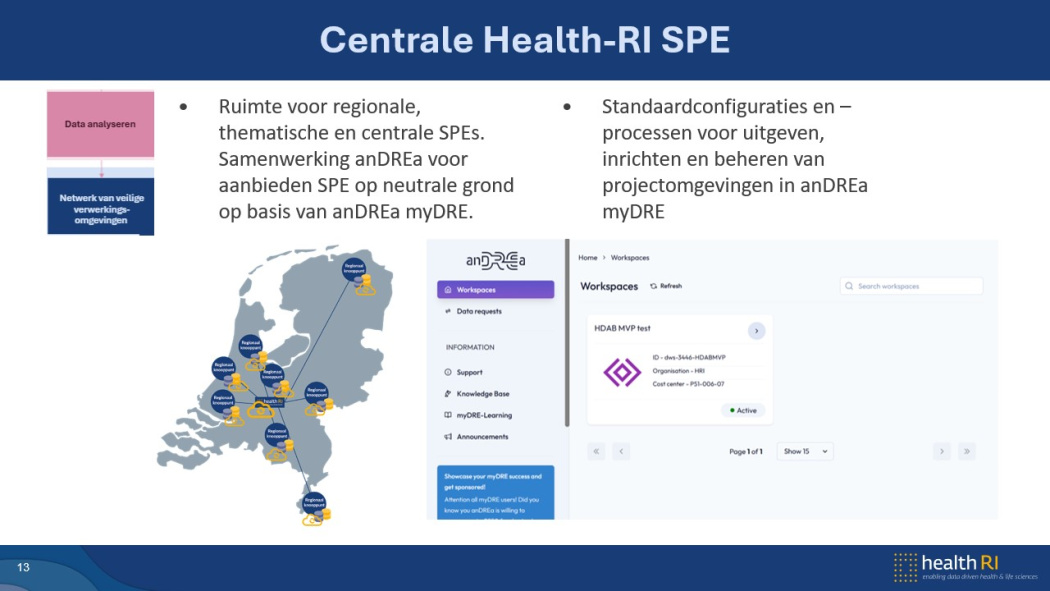
Reusing Data in a Network of Secure Processing Environments
Has your application been approved? If so, the data holders will begin preparing the requested datasets within a secure processing environment. This may involve linking datasets, pseudonymizing data, or anonymizing data, enabling it to be used safely and collectively for approved purposes.
Handling sensitive health data with care is essential. Therefore, datasets are always made available within secure processing environments that are part of the national health data infrastructure. Access is granted only to the individuals who have been approved as part of the application.
To provide these secure environments, Health-RI collaborates with a range of trusted partners.
Once access has been granted, the data user can begin their research. The results of this research will, ideally, contribute to improved health outcomes for society. When the research project is completed, the resulting research data will also be made available for reuse through the data catalogue, enabling future studies to build upon previous findings and further advance knowledge and innovation.
Citizens and Patients
At the heart of all of this is the citizen: after all, the data being used concerns all of us. The national health data infrastructure enables research that contributes to better healthcare and improved public health.
Transparency is essential in this process. Citizens must be able to see how data about them is being used and will also have the right to exercise control over which health data may be used and for what purposes.
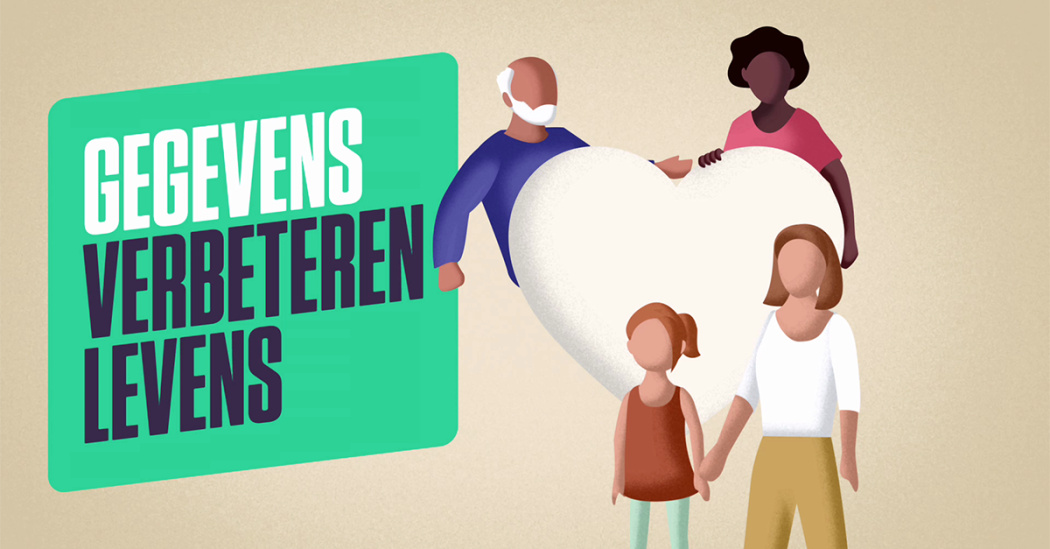
To better inform citizens and patients, Health-RI has developed the Gegevens Verbeteren Levens toolkit together with the Ministry of Health, Welfare and Sport. Through the website, citizens are provided with direct information. Flyers, posters, and waiting room screens support healthcare professionals in informing patients about the reuse of health data.
Clear Agreements
We are also working on a national governance framework, with clear guidelines and rules for the use of the infrastructure. This ensures that all parties can make optimal and responsible use of the national health data infrastructure.
The Future of Data Reuse
Health-RI is working on many more initiatives to enable the future of responsible data reuse. For example, we are also focusing on the life sciences domain, where similar challenges exist around making datasets available and enabling their reuse.
In the future, we aim to make life sciences data discoverable and linkable as well. This includes, for example, data about the living environment, such as living near a highway or in an urban area. Such data can be crucial for understanding health inequalities and improving research.
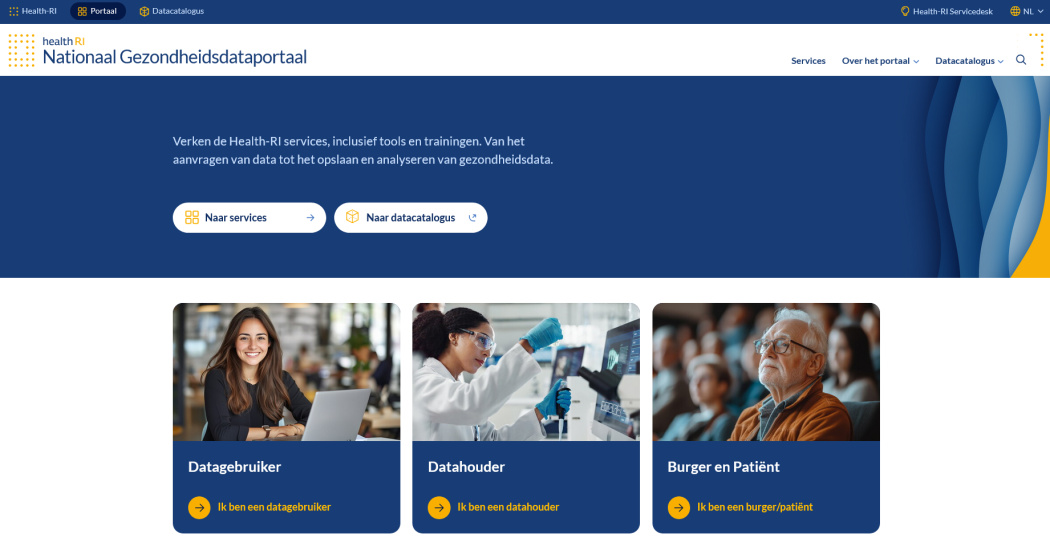
In addition, we support and train both data holders and data users through the National Health Data Portal and through training programmes provided by the Health-RI Academy. These platforms offer practical information, guidance, and answers to frequently asked questions.
Connecting to Europe and International Collaboration
The EHDS is a European regulation. This means that all EU Member States are working simultaneously on the same challenges and solutions related to the responsible reuse of health data. A strong connection with the rest of Europe is therefore essential. The Netherlands must not become an island within a European landscape where health data can be shared safely, consistently, and across borders.
With the introduction of the EHDS, researchers will be able to request data across national borders. Dutch data users will be able to request datasets from other EU countries, while researchers from across Europe will be able to request access to Dutch health data. This requires strong harmonisation, common standards, and intensive collaboration.
That is why Health-RI actively participates in various European initiatives, projects, and partnerships. We contribute to the development of common frameworks, technical standards, governance agreements, and proven practices that can be applied across Europe. By jointly building this European infrastructure, we ensure that the Netherlands can seamlessly connect to the European data landscape and fully benefit from international collaboration.