

Home
From Beginner to Data Steward: Workshop Insights
Better health for citizens and patients through data reuse with an integrated health data infrastructure. This is certainly not just a technical challenge. In order to achieve this, there must above all be people, such as data stewards, who know how data can be made findable, accessible, interoperable and reusable (FAIR) safely and responsibly.
Health-RI is working within the National Growth Fund project to realise this human capital, for example by training data stewards. But we are also working on a strong training portfolio with our participation within the HDAB-NL programme. In the national Health-RI portal and in the Health-RI Academy, we bring together training courses and tools to support data users and data stewards in their user and data journey. In the NWO-funded Thematic Digital Compentence Centres programme, we are working to strengthen digital competences in the broad research domains of Life Sciences & Health (TDCC-LSH).
For starting data stewards within the health domain working on making health data FAIR (Findable, Accessible, Interoperable, Reusable) for research, policy or innovation, Health-RI organises an annual course. This covers the latest insights into making data FAIR in the health domain: the Health-RI FAIR Data stewards basics course.
Read more about some lessons learnt from the latest edition of this course below.
By Maria Vivas Romero, Mirjam Brullemans-Spansier, Fieke Schoots
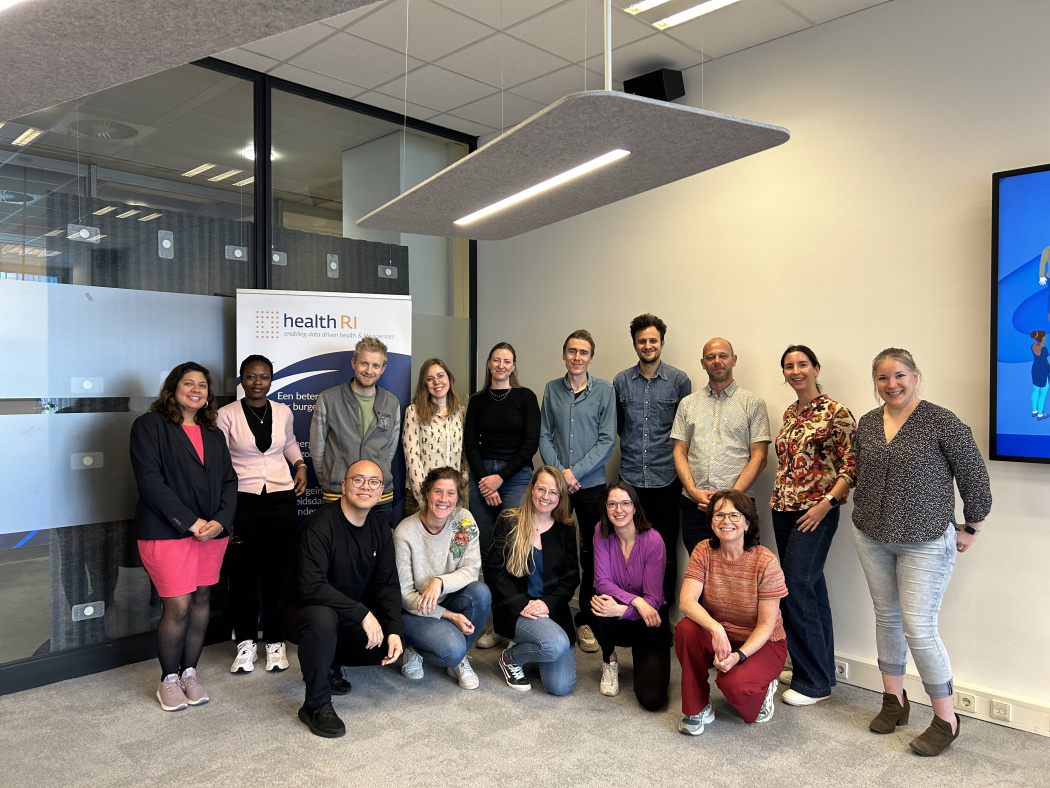
A second round of Health-RI's course for novice data stewards took place in June 2024. It was organised by three members of the FAIR Training and Capacity building task force, a collaboration of Health-RI hub and nodes. A first pilot course took place in 2023. Data steward is a relatively new position within academic hospitals, but a crucial one to ensure that research data can be reused in a responsible and efficient way. The course consisted of three days of talks by experts, demos, and hands-on exercises. It covered specific topics like tools to guide researchers in RDM practices and FAIR (Findable, Accessible, Interoperable, Reusable) and examples of how data is currently made FAIR in the (health) life sciences. The workshop was attended by 11 participants who came from different universities and academic hospitals in the Netherlands.
This blog post is written from the point of view of the organisers / trainers who are also data stewards or have fulfilled this role in the past. It explores the experiences of participants in a data steward course, offering valuable insights for both aspiring and existing data stewards, and for those who need to design training for this audience. We draw from the general course evaluation and interviews Maria had with two participants. We hope this serves as inspiration for new colleagues and existing ones.
Finding Their Path
Stewards come from different paths and journeys both professionally and personally, one of the aspects that Maria enjoys most in her current role as data steward coordinator. In this sense the interviewees highlight two distinct journeys into data stewardship. Daniela, a pharmacist with a research background, sought a supportive role in research. Livia, with a psychology background, transitioned from research assistant to data steward as the need arose within her department. This demonstrates the diverse paths individuals can take towards data stewardship. These profiles guided their motivation for attending the workshop.
Seeking Knowledge
Maria: ”I guess what is common to the interviewees but something we also see in the surveys conducted to evaluate the workshop, is that no one still really is sure about what data stewardship entails. Just like myself at the beginning of my career as data steward I needed a lot of reassurance in that how I was guiding researchers was the right way to do so”. In this sense, both participants were motivated by a desire to solidify their knowledge and best practices. Daniela craved a broader understanding of FAIR data principles, while Livia wanted confirmation of her existing practices and to explore how others approached data stewardship. This underscores the ongoing need for data stewards to develop and refine their skills.
Workshop Takeaways
The workshop proved successful in meeting participants' expectations. Daniela found the FAIR data concepts, especially the "FAIR metro line," particularly valuable. Livia appreciated the confirmation of her existing practices and gained insights into the experiences of other data stewards. This highlights the workshop's ability to provide practical tools and foster a sense of community. From the evaluation we learnt that participants in particular enjoyed the practical, hands-on activities, such as the metadata game, and the examples of FAIR implementation in practice.
Room for Improvement
The first Data Steward interviewed suggested the course could be expanded into a series of sessions to offer more time for information absorption. Data Steward 2 felt the assignments could be accompanied by answer keys or examples to provide an understanding of "ideal" responses. This indicates a need for potential adjustments to the workshop format and materials to enhance clarity and address individual learning styles. This confirms the findings of the general evaluation that it depends on their expertise and tasks which topics data stewards value most.
Networking Opportunities
Finally, just like what we had expected, the workshop facilitated networking between data stewards from different backgrounds. Daniela enjoyed meeting data stewards with research and non-research backgrounds. Livia connected with colleagues from other departments within Radboudumc. This emphasizes the value of the workshop in fostering collaboration and knowledge exchange within the data stewardship community.
Overall, the workshop provided valuable knowledge and networking opportunities for both data stewards interviewed. The feedback suggests that further refining the workshop format and materials could enhance the learning experience for future participants.
As organisers, through our conversations with the participants, we are even more convinced of the need of such a training, to enhance the skills of data stewards but also to increase their visibility and the recognition for their work and to build the network.
In this context it is also interesting to read the statement by another participant of the course, Firdaws, in an interview for the ‘spotlight on data stewards’ series: “The field could use more exposure as a career path option. It is rare to find people who intentionally choose this career path; many people either discover it along their career journey or find themselves in it by chance. It would be helpful if the field is more visible as a career option”.
Training experts from the Health-RI hub and nodes meet every month to share insights and jointly work to strengthen FAIR data stewardship. We believe that data stewards are crucial for Health-RI's mission: Better health for citizens and patients by reusing health & life sciences data with an integrated data infrastructure to enable data driven research, innovation and policy.
Thanks to all participants, speakers and colleagues for turning the workshop into a success. A full programme with the names of all contributors is published in Zenodo.